Anyone who has had to get dental work done, especially non-consmetic dentistry, understands that it is not always a pleasant experience.
Cavities, fillings, root canals, crowns and extractions are not necessarily enjoyable terms to hear at a dental visit.
Yet, somehow, dental health seems to be an issue that could get put on a backburner, until a toothache erupts. One can tend to focus on weight gain and loss, fat build up and other parameters of good health. Perhaps weight gain is more noticeable by oneself and family than dental health.
Unless there is pain or a ‘stench’, one might not notice dental health slipping away.
As someone who has had a painful tooth extraction in the past would know, it is very hard to enjoy foods if there is pain or discomfort with the teeth or surrounding areas.
So, here are some simple tips to maintain the oral health:
- Do not use teeth as tools. Sometimes, it may be tempting to just use one’s teeth to open something, shell a nut or any other task that is not necessarily related to their intended function of chewing food. Using teeth as tools could cause damage to the teeth 11.
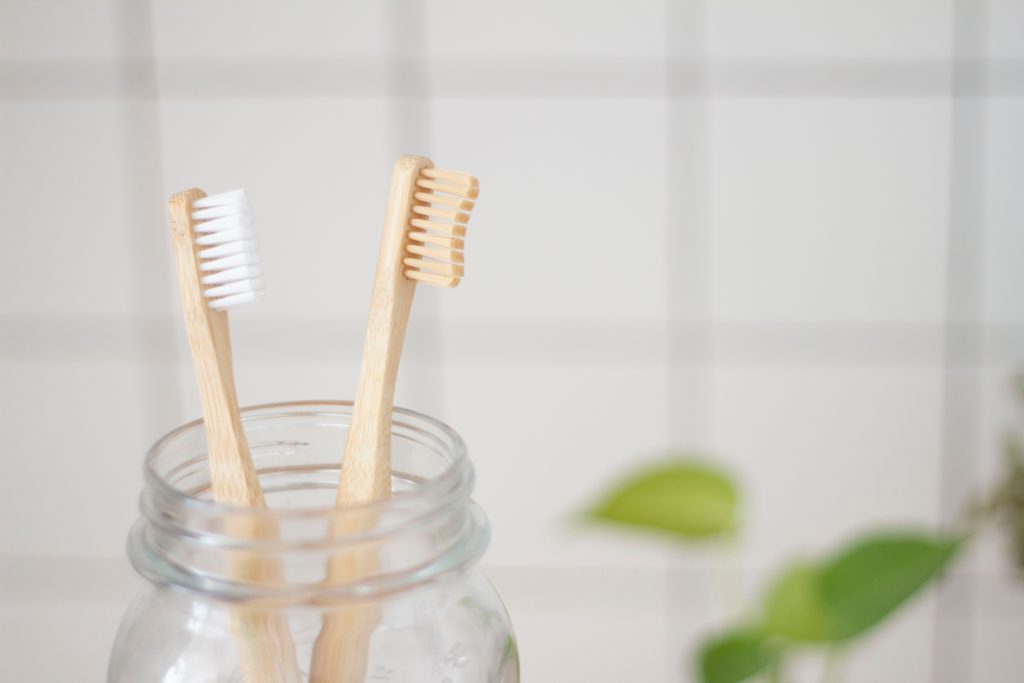
- Brushing twice a day. This is a basic practice that many people are aware of. It is best to brush once in the morning and once at night before going to bed, to prevent dental decay.
- Flossing. Using a good floss, suited to one’s taste, at least once a day is very helpful in preventing build up between teeth and helps prevent cavities 22. One can also use a ‘waterpik powerflosser‘ or other products that make flossing easier.
- Rinsing after every meal. This practice, albeit being part of several cultures, is not universally followed. It is very helpful to rinse one’s mouth thoroughly after every meal or snack. Using a salt solution to rinse out the mouth after meals, is an especially helpful practice.
- Using coconut oil rinses. This practice is as simple as it sounds. A spoonful of coconut oil, swirled around in the mouth, can have many benefits, especially against cavity formation 33 .
- Using a suitable toothpaste. Lastly, using a toothpaste suitable to one’s dental health, can make a big difference towards dental health. There are several types of toothpaste targeted towards ‘sensitive teeth’. Tooth sensitivity could be reflected as pain, triggered by consuming hot or cold substances. There can also be other triggers such as eating something sweet or sour. There are toothpastes selectively aimed at reducing tooth sensitivity. There are also toothpastes that have high fluoride content, intended towards stalling tooth decay. Herbal toothpastes offer various benefits, while using naturally occurring herbs or organic substances. Some examples for these include, ‘Meswak‘ or ‘K.P.Nambudari’s‘ toothpaste.
- Avoiding unnecessary dental procedures for cosmetic purposes. Needless to say, destroying natural teeth in order to improve their cosmetic design involves some damage to the teeth or gums involved. Cosmetic dentistry might be required in some situations. However, one must be aware of the pros and cons of the procedures.
- Regular dental visits to detect problems early on. It is hardly a question that well-visits are often preferred to visits necessitated by dental pain. Hence, regular dental check ups and cleanings might prevent cavities and bigger problems in the future.
Overall, staying aware of dental health and creating daily habits, that promote oral hygiene are all very important aspects of ensuring dental well-being and avoiding painful dental treatments and procedures in the future.
References:
- Teeth As Tools: How Our Teeth Have Been Used Throughout History. url: https://adambrowndds.com/teeth-as-tools-how-our-teeth-have-been-used-throughout-history/
- Don’t toss the floss!The Benefits of Daily Cleaning Between Teeth. url: https://newsinhealth.nih.gov/2016/11/dont-toss-floss
- Effect of coconut oil in plaque related gingivitis — A preliminary report. Peedikayil F.C., Sreenivasan P and Narayanan A. Niger Med J. 2015 Mar-Apr; 56(2): 143–147. doi: 10.4103/0300-1652.153406 url: https://www.ncbi.nlm.nih.gov/pmc/articles/PMC4382606/
Photo credits:
Photo by Superkitina on Unsplash
Disclaimer: The opinions provided here are those of the author from general awareness and do not constitute professional medical advice. Any product recommendations made on this site are made freely and are not paid endorsements.